The Story of Nashdom Abbey

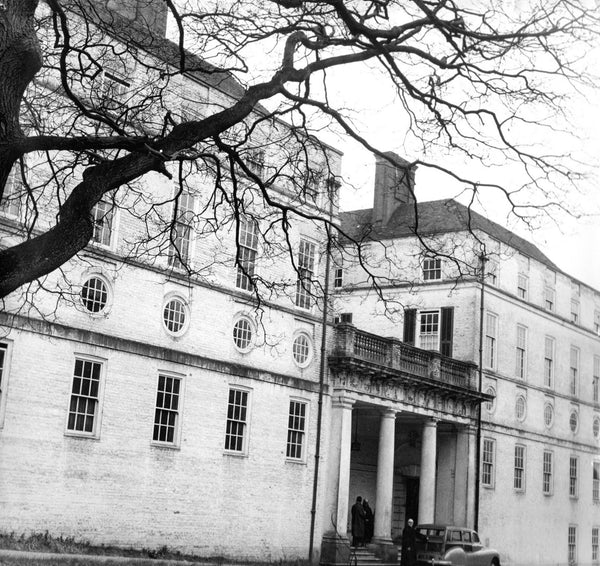
I've had a thing about Nashdom Abbey for as long as I can remember. One my earliest memories- I must have been about five years old- is being taken there by my father to have tea with the monks (it was an Anglo-Catholic Benedictine monastary until 1987) and pulling up in the family Renault outside the rather grand (but austere) porticoed entrance which framed, in turn, a Tuscan style loggia.
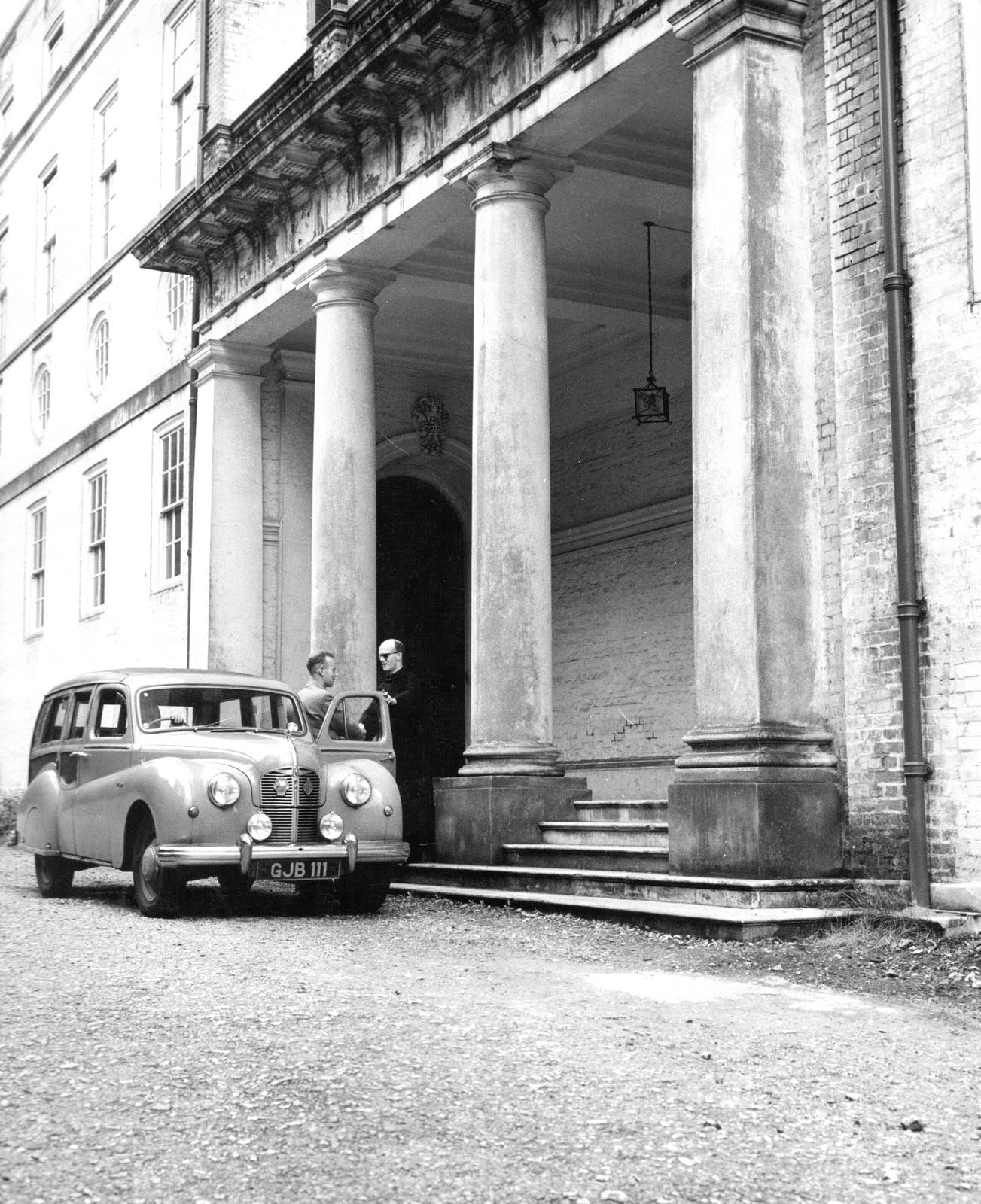
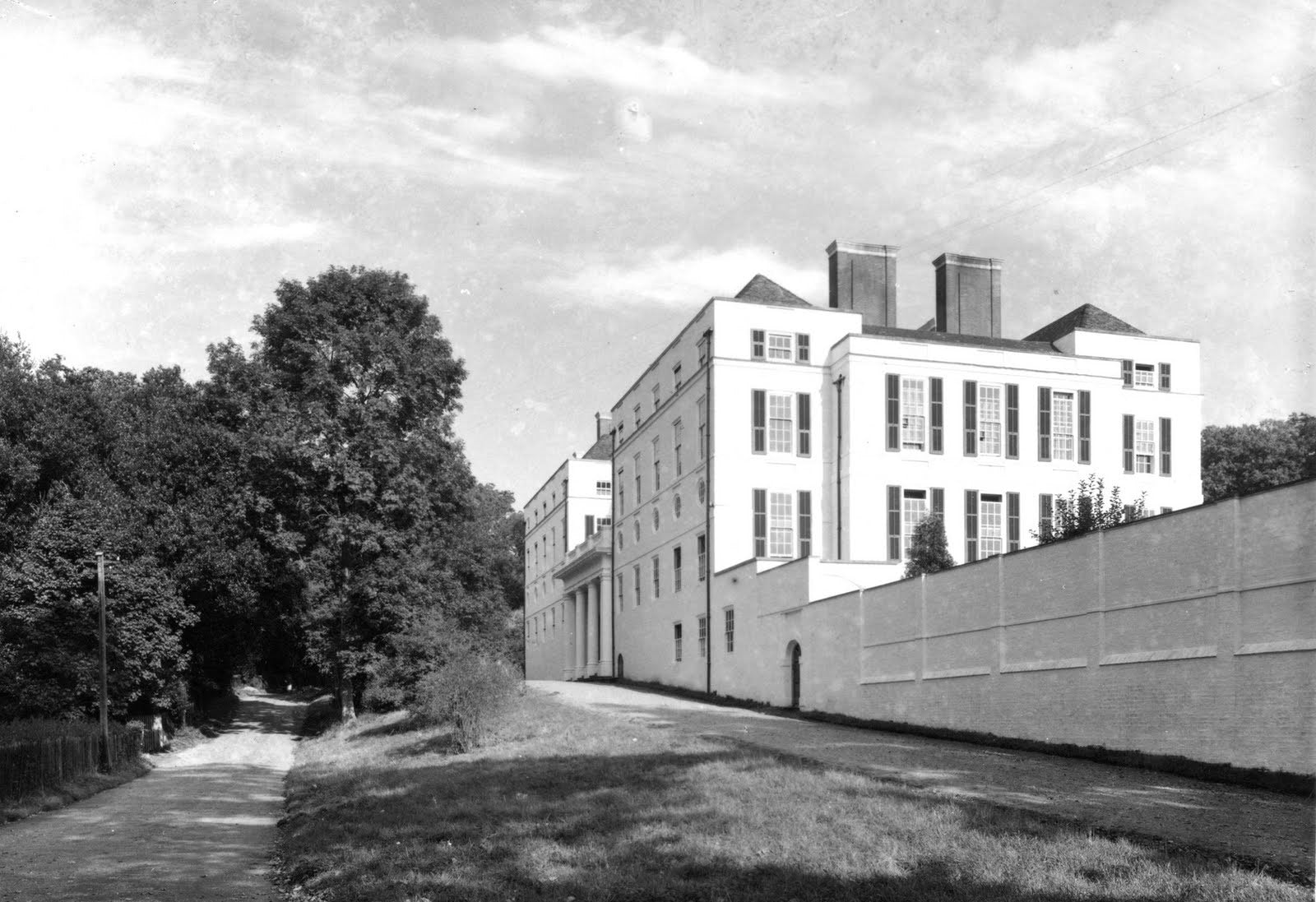
Nashdom House lies just outside Burnham Beeches, Buckinghamshire; about twenty five miles to the West of London. It was built by Sir Edwin Lutyens in 1905-9 for the Russian aristocrat, HH Prince Alexis Dolgorouki and his wife, Francis Fleetwood Wilson, an English heiress from Northamptonshire. They married at the tender age of 50; touchingly it seems to have been a genuine love match. "Nashdom" means "Our Home" in Russian. Like its better known neighbour, Cliveden, Nashdom was really more of a glorified villa- created for fashionable house parties and languid river excursions up The Thames: a retreat from the smoke and chaos of London, rather than as a genuine country house and estate in the old tradition.

Despite its size, it was supposed to have been relatively economical to run. I assume the house would have been crammed with all the latest Edwardian gadgets. And what a splendid house it is! If anyone is looking for a house that illustrates Edwardian confidence and bravado, this, surely is going to be it. It's got more than a whiff of The Great Gatsby about it, hasn't it?
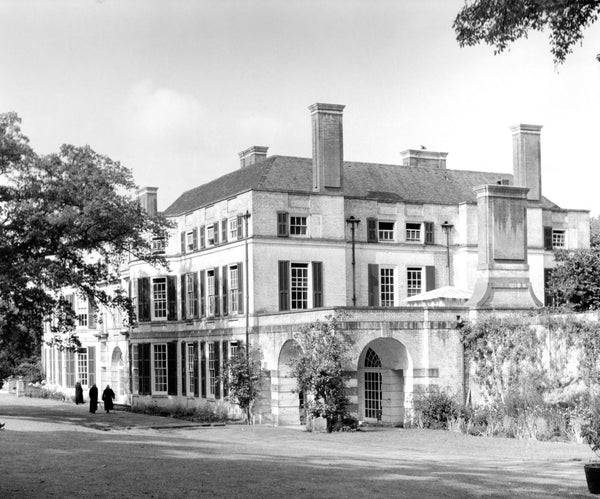
After Alexis's death in 1915, Francis decamped to her Mediterranean villa, where she continued her career as a generous and gregarious hostess. After the First World War, the monks moved in to Nashdom. From 1986, the house was left empty- the interior derelict; a place no doubt haunted by the memory of those Edwardian house parties past. In 1997, the house, inevitably, became luxury flats and apartments for the BMW set.
Postscript
A big thank you to all those readers who have bothered to leave comments and send me more information about Nashdom and its fascinating past. I have been amazed by the response. And in the early summer of 2018, I received the following email from a reader, Lawrence, which, I am sure, will be of interest to anybody intrigued by the history of Nashdom Abbey. In his own words:
"Here are a few snippets of some very secret history on Nashdom, not revealed until now as only I knew…until now.
Nashdom’s Rev. Dom Robert Petit Pierre became my unlikely friend and travelling companion from the hot summer of 1976. He’d walk to Taplow station many weekday mornings, catch a train to Slough then wait for the fast one to London’s West End.
I’d be on Platform 5 too, just in from Windsor. Me 26, undergraduate on way to Uni doing a BA, he (in 60’s maybe) as Britain’s Master Exorcist, on way to Robert Hale publishers in West End, for editorial sessions on his forthcoming book ‘Exorcising Devils’.
We were an unlikely pair, he in long black cloak and cassock, barefoot, battered brown sandals and brief case to match, no hair, pebble glasses and bit of stoop; me hippyish looking, long hair with cut down Levi’s and flip flops.
The first time we spoke, he got on the train behind me and said ‘Are you OK now?’ I guess he sensed that I was troubled. I was, having just been parted from a girl who was caught up in all sort of rubbish to do with Tarot Cards. Anyway, we struck up the first of many conversation that always took place from Slough’s Platform 5, through to Oxford Circus.
One morning, standing together, on the same platform at Oxford Circus but waiting for separate trains, I noticed ‘The Exorcist’ film poster had been put on the wall behind us. I asked Dom Robert what he thought and he scoffed that such movies served the purpose of stimulating sexual instincts and won’t forget his main words; ‘The real thing is more frightening’ .
Funnily enough though (and he did have great sense of humour) he added that whenever he was called to do an exorcism, he usually deduced the problem was more one of mental illness, mostly psychosis, but ‘I perform an exorcism anyway because it won’t do them any harm and usually helps’.
I’ve never by the way bothered to see the film. Ho hum. Dom Robert also used the term ‘little devils’. I wasn’t sure what he meant, but don’t think it was to describe troublesome spiritual entities, but more as a neat term to describe so called poltergeists, especially when objects moved around without explanation through psycho kinesis.
He said the Astors called him up to Cliveden frequently via a shady walk along Parliament Lane. Apparently, they reckoned Cliveden was troubled by poltergeists. (probably when Nancy Astor had put plenty gin down her neck).
We lost contact but not before he’d agreed to write an article entitled ‘Do ghosts really exist’, for a youth community magazine I was editing at the time. I still have the letter from Dom Robert to this day, committing to do the article.
Years passed, the monks left, Nashdom became derelict and as I was living nearby, found out. The place had been ravaged by local oiks of its many fixtures and even a witches' coven were meeting in the 17 acres of ground and disturbed Dom Roberts grave. I told the remaining monks who by then had moved to Speen and I think they tidied things up.
Later, in the middle of the property crash aftermath and contrary to any other speculation, Nashdom was sold for a mere £450,000 in an auction. We all know that since then it has become a valuable financial investment.
BUT, before all that, with a blessing from the senior monk at Speen, I went into Nashdom and recovered some valuable items from the very deep basement, plus hidden parts of the grounds. One such item I acquired was a wood carving of a figure that I placed in the garden of a local Taplow pub, the Oak and Saw. I agreed with the pub that I’ll retain ownership , even though the figure is with them. There is small plaque I put on the front entitled ‘Mystery Monk’, but in truth, it was early stage carving of a new Christ figure to go in the graveyard at Nashdom. I haven’t been to the pub for a while, but guess they still have the item in the garden. I also recovered and safely stored a large plaster moulding of the so called Dolgorouki coat of arms that is at the centre of the top of the building.
Another curious piece I retained from the dusty basement is a beautifully handwritten wine stock list, entitled BINO (Russian for wine). Probably written by Alex. Anyway, this is just the thin end of the wedge when it comes to Nashdom’s secret history.
The one thing I haven’t revealed here is that when Fairbriar homes who bought, renovated and sold off all the Nashdom apartments, I called in just out of curiosity to see what they had done in all their stud walled apartments and was astounded to hear that one of the sales agents had just been spooked when going into one of the show apartments to discover that all the furnishings had been trashed, despite there supposedly being nobody who could have got in there.
I nearly passed comment that maybe it was the drunken dissatisfied ghost of Nancy Astor, but thought no, don’t bother, they’d never believe it even if it was true.”
Lawrence ⓒ 2018
45 comments
I have been the Estate Manager here at Nashdom for very nearly fifteen years. It’s lovely to read the stories of visitors and friends alike.
Many vistors over the years have either studied here or been members of the Benedictine community.they often want to see the graveyard.
If anyone would like more information, or would like to send copies of any pictures, or details of Nashdom’s wonderful past, I’d be very happy to help or receive.
esm@nashdomabbeyestate.com
I remember back in the 1970’s visiting Nashdom Abbey with Holy Trinity church vicar Rev John Maxwell Kerr from Windsor and a couple of friends. I remember Dom Cuthbert and Don Dunston. John Hatton, I have a copy of your news report from 3 July 1987, I moved away and one of my friends sent a photocopy of your article and still have it in the Nashdom Booklet with great photos about the Abbey and life of the monks. Your last paragraph reads as follows: “Forty Years after St Benedict died the monastery he founded was destroyed it was this misfortune that forced his followers to move to Rome, and become the influential force that they were over the next 1300 years. Who knows but what the move of the monks of Nashdom may not result in the same? “ I read that the Monks have sold Elmore Abbey where they move to 1987 in 2010, I think they were down to four monks and some of them were over eighty years of age.
Many thanks Alan Robinson. I did find it!
You have aroused my interest in this famous anglo-catholic priest.
Do you have any idea of the titles of his books and where was his parish?
After meeting Dom Wilfred (who later became Abbot, I believe) in Brighton, I was invited, along with a friend Terry, to spend some time at the Abbey in 1967. We were part of the hippy culture of the time and were allowed to take a supply of (legal) THC, liquid cannabis, with us. We stayed in a guest house but ate with the monks, in silence, as one brother read aloud.
We spent many happy days talking with Dom Wilfred about the many differences and similarities in our lives, and also meditating in the woods while very stoned.
Dudley Rickard: maybe you will find this ! G.A.C.Whatton was famous anglo-catholic priest, who was never a member of the Nashdom community but was an Oblate (associate) and was probably staying there. He might have been a novice at one time but I don’t think ever a monk. He was a parish priest and wrote sevreral books. He was still alive in the late 1970s.